
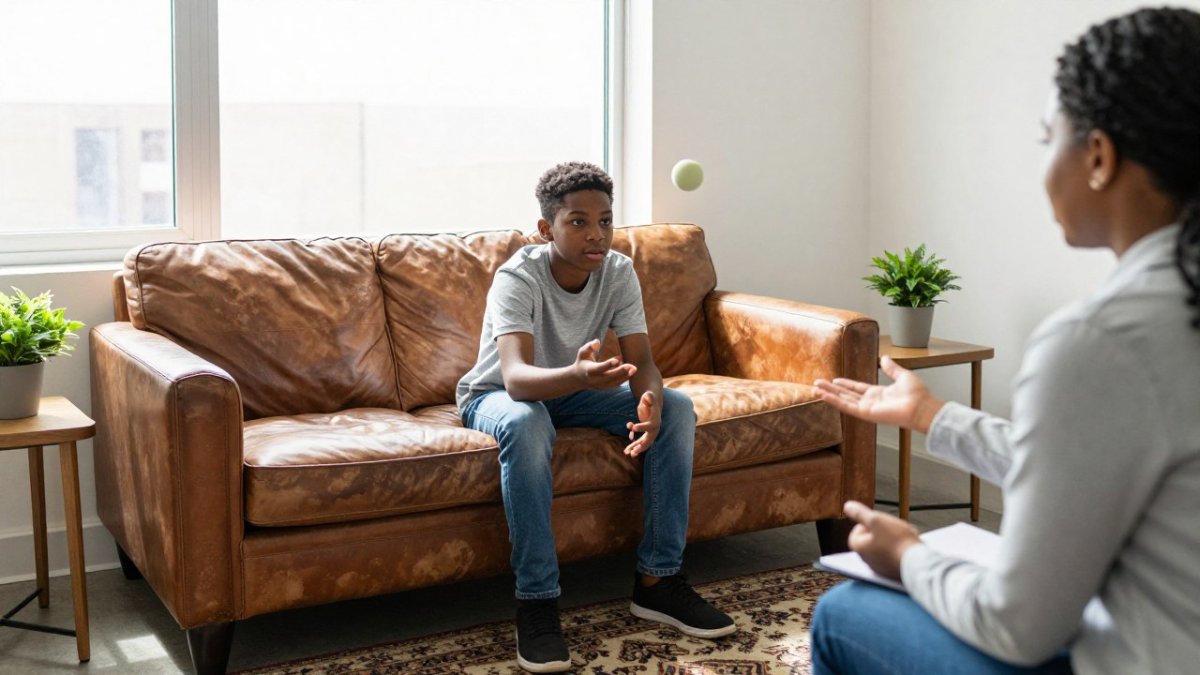
How Do You Choose Social Skills Training for Troubled Teens?
Last Updated: November 8, 2026
Quick Summary
Choose social skills training by matching the program’s target population to your teen’s actual difficulty, then asking providers specific questions about curriculum, motivation, group size, and parent involvement. A credible program can name its skill sequence week by week, explains how progress is measured, and includes real-world practice between sessions. Be cautious of programs that promise fixed outcomes or pressure you to enroll before an assessment.
- Ask the provider to describe the typical teen in their group, including age range and presenting concerns.
- A credible program names its skill sequence and explains the order, such as conversation skills before conflict resolution.
- Avoid programs that promise a fixed outcome, such as making friends within a set number of weeks.
- Group formats are usually less expensive per session than individual coaching.
- Set specific, countable goals before the program starts, such as asking one person to do something outside school each week.
Table of Contents
- What Social Skills Training Actually Does for a Struggling Teen
- Social Skills Activities for Teens That Build Real Confidence
- Social Skills Worksheets for Teenagers: Practice Between Sessions
- Social Skills Therapy for Teens: What Individual and Group Work Looks Like
- Online Social Skills Training for Teens: When Remote Practice Fits
- How to Choose a Program for a Troubled Teen
- Measuring Progress and Helping Skills Stick at Home
- Starting the Conversation with UPTOWN LIFESTYLES LLC
- Frequently Asked Questions
What Social Skills Training Actually Does for a Struggling Teen
Social skills training for troubled teens is a structured, coached approach to teaching the behaviors that make relationships work: reading social cues, starting conversations, handling conflict, and repairing missteps. We treat these as learnable skills rather than personality traits.
A teen who shuts down at lunch or escalates in class is often guessing at unwritten social rules everyone else seems to absorb by osmosis. Training replaces guesswork with practice.
The Skills That Get Taught
The curriculum usually covers a predictable set of building blocks. Conversation skills come first: starting conversations, maintaining conversations, and exiting them without awkwardness. Then active listening, which is harder to teach than it sounds because it requires the teen to stop rehearsing a reply.
From there, programs move into body language and nonverbal communication, empathy and perspective-taking, and problem-solving for real friction points. Conflict resolution and collaboration round out the set. CHADD’s overview of social skills interventions describes the standard methods well: coaching, modeling, role-play, feedback, and repeated practice.
Who Benefits Beyond Autism and Social-Communication Differences
Autism and social-communication differences are the most studied populations, but not the only ones. Teens with social anxiety, ADHD, depression, or a recent psychiatric hospitalization often need the same skills, as do teens whose struggles show up as aggression, withdrawal, or school refusal rather than a diagnosis.
Social Skills Activities for Teens That Build Real Confidence
Confidence follows competence. Effective activities put a teen in a low-stakes social situation, give them one specific skill to try, then debrief what happened, often a weekly ladder of role-play in session, a small real-world task before the next session, and a review of what worked.
Useful activities include:
- Scripted role-play for asking someone to hang out
- Turn-taking games that make interruption visible
- Video review of a mock conversation, with one thing to keep and one to change
The mistake we see most often is skipping the real-world step. Practice inside a therapy room does not transfer on its own.
Social Skills Worksheets for Teenagers: Practice Between Sessions
Worksheets get a bad reputation, mostly deservedly. A worksheet asking a teen to “list three conversation starters” does nothing; one that functions as a between-session log does real work.
The version we favor has three columns: situation, what I tried, what happened. The teen fills it in after a real interaction, not in advance. That log becomes raw material for the next session and turns vague complaints into specific patterns a therapist can address.
Two more formats earn their place. A cue-reading sheet asks the teen to note one facial expression, one tone shift, and one body-language signal from a conversation. A repair sheet covers what to say after a social misstep, the skill most teens never get taught and most need.
Social Skills Therapy for Teens: What Individual and Group Work Looks Like
Individual work suits teens not ready for an audience, letting the therapist slow down, target one skill at a time, and address the anxiety underneath the avoidance.

Many programs combine both formats, with group work for practice and individual coaching for the specific situations a teen avoids.
If social anxiety is the main barrier, that is a distinct treatment target. Families can see the social anxiety therapy services offered locally to understand what dedicated support looks like.
Online Social Skills Training for Teens: When Remote Practice Fits
Remote delivery works better than most parents expect, with one caveat. Online social skills training for teens is strong for instruction, coaching, and conversation practice in one-to-one or small-group video format. It is weak for real-world generalization, which still has to happen in person.
Remote fits when transportation is a barrier, when a teen is reluctant to enter an unfamiliar building, or when local trained providers are thin.
How to Choose a Program for a Troubled Teen
Most program pages tell families what to look for; fewer explain how to evaluate what they hear.
Start with the fit between the program’s target population and your teen’s actual difficulty. A friendship-skills group built for motivated teens will frustrate a teen refusing to attend anything; a program built for anxiety will not address aggression.
Ask what the program does when a teen is unmotivated, because that is common.
Evaluating Answers, Not Just Asking Questions
A provider who cannot answer the motivation question directly is telling you something. Listen for specifics rather than reassurances.
Ask for the curriculum week by week. A credible program can name the skill sequence and explain the order, conversation skills before conflict resolution, for example, because repair depends on staying in a conversation.
Be cautious of any program that promises a fixed outcome, such as making friends within a set number of weeks. Social skills training improves specific behaviors; it does not guarantee friendships.
Red Flags in Program Marketing
- Eligibility built around a single label, with no path for teens whose struggles show up as withdrawal, aggression, or school refusal rather than a diagnosis.
- No parent or caregiver component. Skills that are not reinforced at home rarely generalize.
- Group sizes that are too large for coached practice. Role-play and feedback require individual attention; a group of twenty is a class, not training.
Involving a Reluctant Teen
Teen consent and motivation are not side issues; they are the main reason programs fail. A teen who feels labeled, “the social skills kid”, has a strong incentive to resist.
Frame the program honestly: not as remediation for being broken, but as coaching for a specific situation the teen already wants to change, asking someone out, handling a conflict with a friend, or feeling less drained after school.
Cost, Insurance, and Access
Cost is the question families ask last and worry about first. Pricing depends on format and provider, so ask for the full picture up front, including session rates, any assessment fees, and whether group and individual rates differ.
Insurance can be an important factor. Medicaid coverage for mental health services varies by state and plan, so confirm eligibility before you commit. Medicaid.gov coverage information is the place to check what your plan covers, and the Maryland Department of Health publishes state-specific behavioral health guidance for families.
For families weighing coverage options, this guide to Medicaid and mental health access walks through how eligibility and access work in practice.
Here are the questions worth asking a provider, and what a credible answer sounds like.
| What to ask | Credible answer | Red flag |
|---|---|---|
| Typical teen in the group | Names age range and presenting concerns | Eligibility built around a single label |
| Handling an unmotivated teen | Low-commitment entry point such as intake or parent consult | Pressure to enroll before an assessment |
| Teen who refuses to speak in group | Staff trained to work with resistance | Staff expect compliance |
| Curriculum week by week | Names skill sequence and explains the order | Cannot describe between-session practice |
| Progress measurement | Explains how progress is measured and who sees data | Promises a fixed outcome such as friends in set weeks |
| Parent or caregiver component | Skills reinforced at home | No parent or caregiver component |
| Group size | Small enough for coached role-play and feedback | Group of twenty, a class not training |
| Staff training | Describes training in social skills interventions specifically | Only general counseling described |
Measuring Progress and Helping Skills Stick at Home
Progress in social skills training is often uneven. The realistic markers are behavioral: a teen initiates one conversation a week instead of zero, stays in a difficult conversation thirty seconds longer, or repairs a conflict without an adult stepping in.
Set goals that specific before the program starts. “Better social skills” cannot be measured; “asks one person to do something outside school each week” can. A useful goal names the behavior, the setting, and the frequency.
Turning Goals into Observable Indicators
A well-run program can help you translate a vague concern into an indicator you can count.
The indicators should be observable by someone other than the teen alone, at least at first. Self-report is useful but unreliable in the early weeks, when a teen may either overstate progress to please adults or understate it to avoid pressure. A parent, teacher, or group facilitator can confirm whether the behavior happened.
Who Tracks What, and How Often
A simple weekly review is often more sustainable than a daily log.
Reviewing progress at intervals, such as early and mid-program, helps families and providers decide whether practice tasks need to change.
A teen who meets goals inside the therapy room but shows no change at school may not yet have generalized the skill, and a different practice environment may help.
Generalizing Skills Across Settings
Skills learned in a therapy room do not automatically show up at the lunch table; generalization has to be planned.
Online interactions can deserve their own step.
Parents and caregivers matter here. For parents who want concrete strategies for behavioral challenges, these positive parenting classes cover the reinforcement side in detail.
Watch out: removing a teen from every uncomfortable social situation to reduce distress backfires.
Starting the Conversation with UPTOWN LIFESTYLES LLC
The hardest step is usually the first phone call, and we understand why.
We provide zero-cost PRP services for Medicaid recipients, delivered by licensed mental health professionals including psychiatrists, psychologists, and social workers.
If your teen is struggling socially and you are not sure where to start, reach out. We will walk through what fits.
Contact UPTOWN LIFESTYLES LLC to start the conversation.
A teen who has been written off as difficult or withdrawn is often a teen who was never taught the rules everyone else seemed to absorb.
Frequently Asked Questions
How can I teach my teenager social skills at home?
Start with everyday practice rather than lectures. Pick one skill a week, such as starting a conversation or reading body language, and build it into normal routines: ordering food, calling a relative, inviting a friend over. Pair it with social skills worksheets for teenagers so your teen can reflect on what worked. Praise specific behaviors you see, like waiting for a pause before speaking, instead of general encouragement. If your teen avoids social situations entirely or shows distress, bring in a professional for a fuller assessment.
Can social skills therapy help teenagers who are not autistic?
Yes. Social skills therapy for teens addresses social communication difficulties that show up with anxiety, depression, ADHD, trauma, or after a psychiatric hospitalization. The focus is on unwritten social rules, peer interaction, active listening, and conflict resolution, not on one diagnosis. Teens who are withdrawn, quick to anger, or repeatedly misreading social cues can practice these skills in group or individual sessions. A licensed clinician can tell you whether therapy fits your teen’s situation or whether another service is a better match.
Are there free online social skills training resources for teens?
Some clinics and nonprofits publish free guides, videos, and worksheets, and CHADD’s overview of social skills interventions describes common methods like coaching, modeling, and role-play at no cost. Free resources work well as a supplement, but they rarely include feedback from a trained clinician, which is where progress usually comes from. If cost is a barrier, ask providers whether they accept Medicaid or offer a sliding scale. Check with your Medicaid plan or the official state Medicaid program to see which services are covered for your teen.
What social skills activities can teens practice at home?
Try role-play before a real event, such as rehearsing how to join a lunch table or ask a teacher for help. Family board games teach turn-taking and handling frustration. Have your teen practice a two-minute phone call with a relative, then debrief what went well. Social skills activities for teens work best when they are short, repeated, and followed by specific feedback. Keep a simple log of practice moments so you can see progress over weeks rather than judging a single awkward interaction.
How long does social skills training take to show results?
Expect weeks, not days. Structured programs often run in cycles of several weeks, and many teens need repeated practice before a skill holds under pressure at school or with peers. Progress shows up first in familiar settings, then in harder ones. Ask the provider how they measure change, such as parent and teen ratings or observed behavior in group. Realistic goals, like one new peer interaction a week, beat vague hopes of becoming outgoing. Generalization to everyday settings is the real test.
