

Life Skills Training: Essential Programs for Mental Health Recovery
Table of Contents
- What Life Skills Training Covers
- Daily Living Skills Examples and Practical Applications
- Psychiatric Rehabilitation Program Services and Structure
- Social Skills Development Activities for Meaningful Connections
- Evidence-Based Approaches in Life Skills Training
- Life Skills Training for Employment Readiness
- Getting Started With Life Skills Training Programs
- Frequently Asked Questions
Last Updated: September 25, 2026
What Life Skills Training Covers
Life skills training teaches practical abilities people need for daily living, work, and relationships. At UPTOWN LIFESTYLES LLC, we define life skills training as structured instruction in essential competencies that help individuals manage their lives independently and build meaningful connections with others.
The core areas covered in most life skills training programs include personal management, social interaction, employment readiness, and decision-making. These aren’t abstract concepts, they’re real, actionable abilities that directly improve quality of life.
Personal management skills cover basics like hygiene, nutrition, sleep routines, and medication management. Social skills development focuses on communication, active listening, conflict resolution, and building healthy relationships. Employment readiness includes job search techniques, workplace behavior, resume writing, and interview skills. Decision-making and problem-solving help individuals navigate daily challenges without becoming overwhelmed.
Many programs also address financial literacy, digital safety, and emotional regulation. These areas have become increasingly important as people face more complex daily demands. The combination of these skill areas creates a comprehensive foundation for independent living and social integration.
The most effective life skills training programs don’t just teach one skill in isolation. They connect different skills together so people see how managing their emotions helps with social interactions, which then supports employment success.
Daily Living Skills Examples and Practical Applications
Daily living skills are the foundation of independent functioning. These include meal planning and preparation, household management, personal hygiene, medication adherence, managing appointments, and financial management. In today’s environment, digital literacy and online safety are equally critical to thriving independently.
Meal planning teaches people how to choose nutritious foods, read nutrition labels, and prepare simple meals on a budget. Household management covers cleaning, laundry, basic repairs, and creating a safe living environment. Personal hygiene instruction addresses bathing, grooming, dental care, and recognizing when medical attention is needed.
Medication management is critical for people with mental health conditions. This includes understanding why medications matter, taking doses correctly, recognizing side effects, and communicating with healthcare providers. Many individuals struggle with this area initially but gain confidence through structured practice.
Financial Literacy and Budgeting has emerged as one of the most consequential life skills. Structured financial training teaches people to create a monthly budget by tracking income and fixed expenses (rent, utilities, medications), then allocating remaining funds to variable expenses and savings. Practical modules cover opening and maintaining a bank account, understanding checking versus savings accounts, recognizing overdraft fees, and building emergency savings even with limited income. Many programs teach the 50/30/20 budgeting framework adapted for lower incomes: 50% for needs, 30% for wants, 20% for debt repayment or savings. Bill payment systems, both automatic and manual, are practiced in real settings. Credit literacy instruction helps people understand credit scores, avoid predatory lending, and recognize the long-term cost of high-interest debt. People learn to identify scams targeting vulnerable populations, such as payday loans or advance-fee schemes. Hands-on practice using sample budgets, real utility bills, and mock banking scenarios builds confidence before managing actual finances.
Digital Literacy and Online Safety now rank alongside traditional daily living skills. Training covers device basics (smartphone, computer, tablet operation), password security, and recognizing phishing attempts and social engineering. Social media safety modules teach people to manage privacy settings, understand what personal information should never be shared publicly, and recognize manipulation tactics used by scammers or predatory contacts. Online banking safety, verifying secure connections, never sharing login credentials, monitoring accounts for unauthorized activity, prevents financial exploitation. People learn to identify misinformation and verify information sources, critical for health decisions and avoiding conspiracy-driven isolation. Digital communication etiquette training addresses appropriate tone in emails and messages, understanding when to use different platforms, and recognizing when online conflict should move to in-person conversation. Many individuals with mental health histories are at higher risk for online exploitation; structured training reduces vulnerability and builds digital confidence.
The difference between struggling independently and thriving comes down to mastery of daily living skills. People who can manage meals, medications, money, and digital interactions experience less crisis, reduced exploitation risk, and more stability.
Psychiatric Rehabilitation Program Services and Structure
A psychiatric rehabilitation program (PRP) provides comprehensive support designed specifically for people managing serious mental health conditions. These programs combine clinical care with practical life skills training in an integrated approach.
The structure of a PRP typically includes individual assessment, personalized goal-setting, skills training, peer support, and regular progress monitoring. Licensed mental health professionals, psychiatrists, psychologists, and social workers, work together to address both clinical symptoms and practical life challenges.
UPTOWN LIFESTYLES LLC’s psychiatric rehabilitation program services are offered at zero cost to Medicaid recipients in the Baltimore area. This removes financial barriers that often prevent people from accessing the support they need. Our team provides not just skills training but also assistance with stable housing and nutrition, recognizing that people cannot develop life skills effectively when basic needs are unmet.
The program structure recognizes that mental health recovery isn’t just about symptom management. It’s about building resilience, developing practical abilities, and creating a life worth living. Services are delivered in community settings, not institutional environments, which helps people practice skills in real-world contexts.
Individual counseling addresses specific mental health symptoms and personal barriers. Group sessions provide peer support and normalize shared experiences. Community-based activities help people practice skills in natural environments. This multi-level approach produces better outcomes than isolated clinical treatment alone.
Social Skills Development Activities for Meaningful Connections
Social skills development helps people build and maintain healthy relationships, communicate effectively, and participate in their communities. These aren’t optional extras, they’re essential for mental health recovery and quality of life.
Common social skills activities include role-playing conversations, practicing active listening, learning assertiveness, and working through conflict scenarios. Peer support groups provide natural settings where people can practice these skills with others facing similar challenges. Community activities like group outings, volunteer opportunities, and social clubs help people build confidence in real-world interactions.
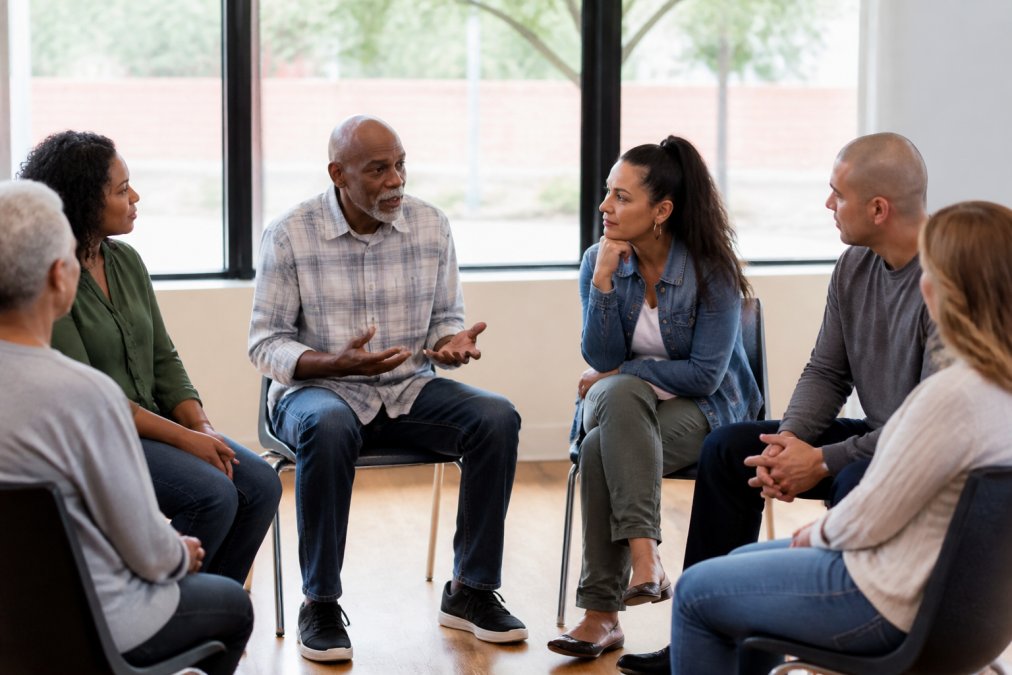
Assertiveness training teaches people how to express their needs, set boundaries, and say no without aggression or passivity. Many people with mental health histories struggle with this balance. Structured practice builds confidence. Communication skills training covers listening, asking questions, expressing feelings clearly, and responding to criticism constructively.
Conflict resolution activities teach people how to handle disagreements without escalating tensions. These skills prevent isolation and help people maintain employment, housing, and family relationships. Peer connection activities recognize that meaningful relationships are a core human need and a protective factor for mental health.
Without deliberate social skills development, people can become isolated even when living in community settings. Isolation increases relapse risk and reduces overall quality of life. Structured social skills training addresses this directly.
Evidence-Based Approaches in Life Skills Training
Evidence-based approaches in life skills training are grounded in research about what actually works. These methods have been tested and shown to produce measurable improvements in independent functioning and quality of life. (Source: mental health and medication adherence)
Cognitive-Behavioral Approaches help people identify unhelpful thought patterns and develop new behaviors. In practice, this means teaching someone to recognize the thought “I can’t manage money” and replace it with structured practice that proves capability. A person might track spending for two weeks, identify patterns, then adjust behavior based on data rather than emotion. This evidence-based methodology works because it addresses both thinking and action simultaneously.
Motivational Interviewing Techniques increase engagement by meeting people where they are rather than imposing goals. A practitioner might ask, “What would change if you could manage your medications consistently?” rather than lecturing about compliance. This approach reduces resistance and helps people move from ambivalence (“I don’t know if I can do this”) to commitment (“I’m ready to try”).
Life Skills Training for Employment Readiness
Employment is a key recovery goal for many people. Work provides income, structure, purpose, and social connection. Life skills training for employment readiness addresses both practical and interpersonal skills needed for job success.
Getting Started With Life Skills Training Programs
Starting life skills training begins with assessment and goal-setting. A qualified professional evaluates current functioning, identifies strengths and gaps, and works with the person to establish meaningful goals.
| Training Component | Purpose | Timeline |
|---|---|---|
| Initial Assessment | Identify current functioning and goals | Week 1 |
| Skill Selection | Prioritize areas for training | Week 2 |
| Direct Instruction | Teach specific skills | Weeks 3-12 |
| Guided Practice | Practice skills with support | Weeks 4-12 |
| Independent Application | Use skills in real settings | Ongoing |
| Progress Review | Evaluate outcomes and adjust | Monthly |
Frequently Asked Questions
What is the primary goal of life skills training in mental health recovery?
Life skills training helps individuals develop practical abilities needed for independent living, emotional regulation, and social connection. For people managing mental health conditions, these programs build confidence in daily tasks like budgeting and self-care, reduce isolation through interpersonal skill development, and prepare participants for meaningful work. The goal is to support recovery by addressing both the practical barriers and emotional challenges that affect quality of life and long-term stability.
Are there zero-cost life skills training programs available for Medicaid recipients?
Yes. Psychiatric Rehabilitation Programs (PRPs) funded through Medicaid provide comprehensive life skills training at no cost to eligible recipients. These programs include training in daily living skills, social skills development, and employment readiness. Medicaid coverage varies by state, so eligibility depends on your specific circumstances. Contact a local mental health provider or your Medicaid office to confirm your coverage and find programs in your area.
How does life skills training help with vocational development and employment readiness?
Life skills training prepares individuals for work by building soft skills like communication, problem-solving, and time management alongside practical vocational training. Programs teach resume writing, interview skills, workplace communication, and strategies for managing mental health symptoms on the job. Participants develop confidence in their ability to perform work tasks and navigate workplace relationships. This foundation makes employment transitions more sustainable and increases the likelihood of long-term job success for individuals returning to work after mental health challenges.
What role do licensed professionals play in life skills training?
Licensed mental health professionals such as psychologists, social workers, and counselors design and deliver evidence-based life skills training tailored to individual needs. They assess each person’s strengths and challenges, teach coping strategies for managing symptoms, facilitate group activities that build interpersonal skills, and provide ongoing support and accountability. Their expertise ensures that training addresses both skill gaps and the underlying mental health factors that affect daily functioning, making the program more effective than generic instruction alone.