

7 Ways to Improve Mental Health With Psychiatric Rehabilitation
Table of Contents
- What Psychiatric Rehabilitation Actually Does for Mental Health
- 1. Develop Practical Life Skills and Problem-Solving Abilities
- 2. Build Social Connections and Community Integration
- 3. Learn Effective Symptom Management Strategies
- Psychiatric Rehabilitation Program Benefits for Recovery
- Understanding Medicaid Psychiatric Rehabilitation Eligibility
- Getting Started With Psychiatric Rehabilitation Support
- Frequently Asked Questions
Last Updated: September 27, 2026
What Psychiatric Rehabilitation Actually Does for Mental Health
Psychiatric rehabilitation is a structured approach to helping people with serious mental health conditions rebuild their lives and achieve meaningful goals. It focuses on practical skills, community connections, and symptom management rather than just treating symptoms alone. At UPTOWN LIFESTYLES LLC, we offer a comprehensive Psychiatric Rehabilitation Program (PRP) to help individuals build resilience and lead fulfilling lives.
The difference between psychiatric rehabilitation and traditional therapy is important. Traditional therapy often focuses on talking through problems and understanding root causes. Psychiatric rehabilitation goes further. It teaches concrete skills you can use every day. It connects you with community resources. It helps you work toward employment, stable housing, and meaningful relationships.
Many people don’t realize that recovery from serious mental health conditions is possible. Research shows that psychiatric rehabilitation helps individuals experience significant improvements in their quality of life, daily functioning, and community integration. This isn’t about quick fixes. It’s about building a sustainable foundation for long-term wellness.
The most overlooked part of mental health recovery is the practical side. You can understand your condition perfectly and still struggle to pay rent, cook meals, or maintain friendships. Psychiatric rehabilitation addresses all three.
1. Develop Practical Life Skills and Problem-Solving Abilities
Life skills training teaches you how to handle real-world challenges that affect your mental health. This includes budgeting, meal planning, managing medications, keeping your living space organized, and handling conflict with family or roommates.
When you’re managing a serious mental health condition, these everyday tasks can feel overwhelming. You might know what to do in theory but struggle to follow through. A psychiatric rehabilitation program breaks these skills into manageable steps. You learn by doing, not just by listening.
Problem-solving abilities matter just as much. Life throws obstacles at everyone. When you have a mental health condition, obstacles can feel insurmountable. Psychiatric rehabilitation teaches you a framework for approaching problems:
- Identify the specific problem clearly
- List possible solutions without judging them yet
- Weigh the pros and cons of each option
- Try one solution and see what happens
- Adjust if needed
This process removes the emotional overwhelm from decision-making. It gives you a tool you can use repeatedly. Over time, problem-solving becomes automatic.
UPTOWN LIFESTYLES LLC offers life skills training. Our licensed mental health professionals work with you on the specific challenges you face, breaking skills into concrete steps you can practice and master.
The gap between knowing what to do and actually doing it is where most people get stuck. Psychiatric rehabilitation bridges that gap through structured practice and real-world application.
2. Build Social Connections and Community Integration
Isolation fuels mental health struggles. When you withdraw from others, symptoms often get worse. Building meaningful social connections is one of the most powerful tools for recovery.
Psychiatric rehabilitation helps you develop social skills and find community. This might mean learning how to start conversations, join groups, or maintain friendships. It might mean connecting with others who have similar experiences through support groups or community activities.
Community integration means more than just having friends. It means participating in your community in ways that matter to you. This could be volunteering, attending religious services, joining a hobby group, or becoming involved in neighborhood activities.
The benefits are real:
- Reduced feelings of loneliness and isolation
- Increased sense of purpose and belonging
- Better coping skills through peer support
- Improved motivation and engagement with treatment
- Greater accountability and encouragement
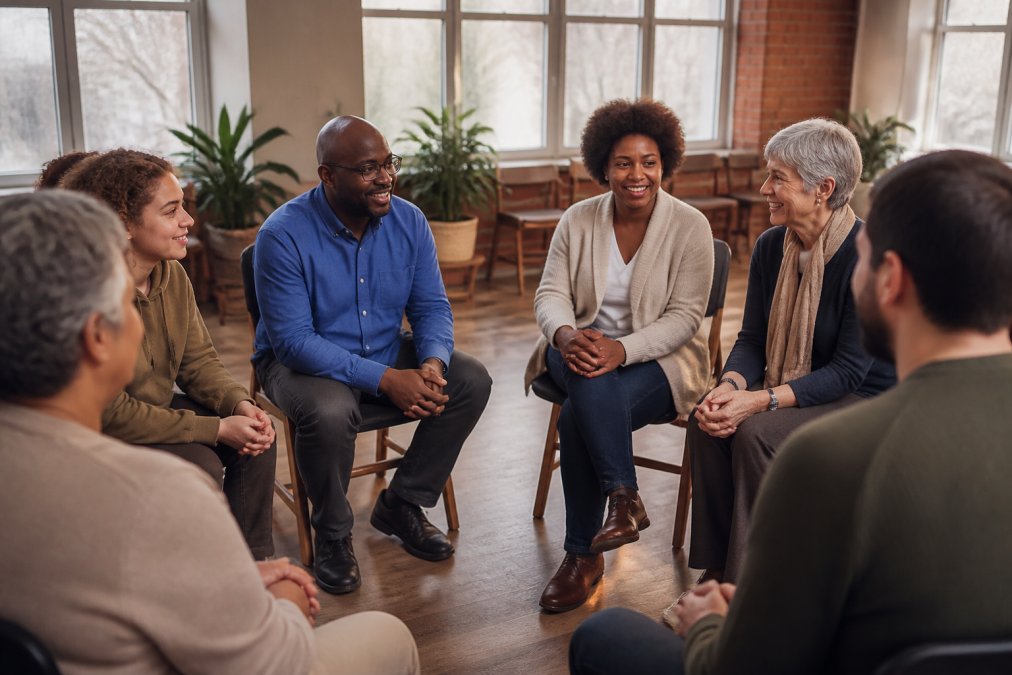
Many people worry they won’t fit in or that others will judge them. Psychiatric rehabilitation programs intentionally create safe spaces where this fear dissolves. You meet others navigating similar challenges. You realize you’re not alone. That realization changes everything.
At UPTOWN LIFESTYLES LLC, our program includes social skills development. Our team helps you identify communities and activities that align with your interests and goals. We provide support as you build these connections, making the process less intimidating.
3. Learn Effective Symptom Management Strategies
Managing symptoms is different from eliminating them. Some symptoms of serious mental health conditions don’t disappear completely. The goal is to reduce their impact on your daily life and develop strategies to cope when they do occur.
Symptom management includes several approaches. Medication management is often part of the picture. Taking prescribed medications consistently, understanding how they work, and communicating with your doctor about side effects all matter. But medication alone usually isn’t enough.
Behavioral strategies help too. These might include:
- Recognizing early warning signs that symptoms are worsening
- Using grounding techniques when anxiety or paranoia increases
- Maintaining regular sleep and exercise routines
- Avoiding triggers when possible
- Reaching out for support before crisis hits
Coping mechanisms are personalized. What works for one person might not work for another. Psychiatric rehabilitation helps you discover what works for you through trial and feedback.
Crisis prevention planning is critical. Many people don’t have a plan until crisis hits. By then, it’s too late to think clearly. A written crisis plan developed when you’re stable gives you a roadmap during difficult moments. It includes warning signs, coping strategies, people to contact, and what kind of help you want.
Waiting until you’re in crisis to figure out your plan is a common mistake. At that point, your thinking is compromised and you’re more likely to make decisions you regret. A written plan made during stable times is invaluable.
Psychiatric Rehabilitation Program Benefits for Recovery
The benefits of psychiatric rehabilitation extend far beyond symptom reduction. Participants typically experience improvements in several key areas.
Employment and economic stability often improve significantly. Many people with serious mental health conditions want to work but don’t know how to navigate the process. Psychiatric rehabilitation includes vocational support. This might mean job coaching, interview preparation, or ongoing support once you’re employed. Work provides income, structure, purpose, and social connection.
Housing stability is foundational. It’s nearly impossible to focus on recovery when you’re unstable housing or homeless. Psychiatric rehabilitation programs help you secure stable housing and develop the skills to maintain it. This includes budgeting for rent, understanding tenant rights, and managing household responsibilities.
Quality of life improves as you develop skills and connections. You’re not just surviving. You’re building a life worth living. You pursue interests. You maintain relationships. You contribute to your community.
Medication adherence often improves when you’re connected to support. Understanding why you take medications and having someone check in with you increases the likelihood you’ll take them consistently. Better adherence means better symptom control.
Reduced hospitalizations and emergency visits are common outcomes. When you have skills, connections, and a crisis plan, you’re less likely to end up in crisis. This saves money and reduces trauma.
According to research from the Substance Abuse and Mental Health Services Administration (SAMHSA), individuals receiving psychiatric rehabilitation services show measurable improvements in functioning, employment rates, and community integration compared to those receiving standard care alone.
Understanding Medicaid Psychiatric Rehabilitation Eligibility
For many people, cost is a major barrier to accessing psychiatric rehabilitation. Medicaid covers psychiatric rehabilitation services for eligible individuals.
To qualify for Medicaid, you must meet income and resource limits (Seniors & Medicare and Medicaid Enrollees). These vary by state, so check with your state’s Medicaid office for specific numbers. You’ll need to provide documentation of your income and resources.
For psychiatric rehabilitation specifically, you typically need a diagnosis of a serious mental health condition. This might include schizophrenia, bipolar disorder, major depression, or other conditions that significantly impact functioning. Your doctor or mental health provider can help determine whether you meet diagnostic criteria.
The process usually involves:
- Applying for Medicaid through your state program
- Getting approved for coverage
- Obtaining a referral from your doctor or mental health provider
- Working with a psychiatric rehabilitation provider who accepts Medicaid
UPTOWN LIFESTYLES LLC provides zero-cost psychiatric rehabilitation services for Medicaid recipients. This means there are no out-of-pocket costs for eligible individuals.
Many people assume they don’t qualify for Medicaid without checking. Income limits are often higher than people expect. It’s worth applying even if you’re uncertain. The worst that happens is you get denied and you’re no worse off than before.
According to the Centers for Medicare and Medicaid Services (CMS), Medicaid-covered psychiatric rehabilitation services are available in all states, though specific services and eligibility criteria vary by state program.
Getting Started With Psychiatric Rehabilitation Support
Starting psychiatric rehabilitation can feel daunting. You might worry about opening up to someone new or whether the process will actually help. These concerns are normal and understandable.
Initial assessment typically includes:
- Review of your medical and psychiatric history
- Discussion of your current symptoms and challenges
- Exploration of your goals and interests
- Assessment of your strengths and resources
- Development of a personalized treatment plan
Frequently Asked Questions
What is the goal of psychiatric rehabilitation?
Psychiatric rehabilitation aims to help individuals with serious mental illness develop practical skills, rebuild social connections, and reintegrate into their communities. Unlike traditional therapy that focuses on symptom reduction alone, psychiatric rehabilitation addresses daily functioning, employment readiness, housing stability, and overall quality of life. The goal is to support people in achieving their personal goals and living as independently as possible while managing their mental health effectively.
Who qualifies for Medicaid psychiatric rehabilitation eligibility?
Medicaid psychiatric rehabilitation eligibility varies by state and typically includes individuals with serious mental illness, serious emotional disturbance in adolescents, or significant functional impairment related to mental health conditions. To determine your specific eligibility, contact your state Medicaid office or a local psychiatric rehabilitation provider. Many programs serve Medicaid recipients at no cost, making professional support accessible regardless of income level.
What life skills training for mental health is typically included in these programs?
Life skills training for mental health covers practical areas essential for independent living: budgeting and financial management, meal planning and nutrition, household management, personal hygiene and self-care routines, medication management, and problem-solving strategies. Programs also teach communication skills, conflict resolution, and how to access community resources. This training is tailored to each person’s goals and challenges, helping them build confidence and competence in daily activities.
Can psychiatric rehabilitation help right after hospital discharge?
Yes, psychiatric rehabilitation is designed to support people immediately following inpatient psychiatric care. In fact, the transition period after hospitalization is a critical time when structured support can prevent relapse and ease reintegration into home and community life. Psychiatric rehabilitation programs help with crisis prevention planning, medication adherence, rebuilding routines, and reconnecting with family and community resources during this vulnerable phase.