

Best Psychiatric Rehab Centers in Maryland
Last Updated: November 4, 2026
Quick Summary
The best psychiatric rehab centers in Maryland match the level of care to the person’s actual need, from community-based psychiatric rehabilitation to inpatient and residential dual-diagnosis treatment. Our top pick for Medicaid recipients in Baltimore is UPTOWN LIFESTYLES LLC, which describes its psychiatric rehabilitation services as zero-cost for Medicaid recipients.
- Ask each admissions line what level of care it recommends and why before committing.
- A quoted per-day rate is not reliable until insurance has been verified.
- Psychiatric rehabilitation builds daily living skills; therapy focuses on emotional processing.
- If someone is in immediate danger, call 911 or the 988 Suicide & Crisis Lifeline.
- Discharge planning should start on day one of inpatient care.
Table of Contents
- How We Selected the Best Psychiatric Rehab Centers in Maryland
- Quick Comparison: Maryland Psychiatric Rehab Centers at a Glance
- 1. UPTOWN LIFESTYLES LLC: Community-Based Psychiatric Rehabilitation for Medicaid Recipients
- 2. Sheppard Pratt: Residential and Structured Day Services
- 3. Johns Hopkins Hospital: Hospital-Based Psychiatry and Behavioral Sciences
- 4. University of Maryland Medical Center: Academic Psychiatric Care
- 5. Adventist HealthCare Shady Grove Medical Center: Inpatient Mental Health Treatment
- 6. Tranquility Woods: Residential Dual-Diagnosis and Detox
- What Level of Care Do You Actually Need?
- Frequently Asked Questions
How We Selected the Best Psychiatric Rehab Centers in Maryland
Finding the best psychiatric rehab centers in Maryland starts with one question most directories never answer: what level of care does this person actually need? A good program should offer verified credentials, clear admission pathways, honest cost information, and a real fit between program and daily life. (Source: the National Institute of Mental Health)
A useful comparison looks at level of care, staffing credentials, insurance and Medicaid acceptance, admission process and wait times, program structure, and accessibility for adults and families. Below are seven options, from community-based psychiatric rehabilitation to hospital psychiatry and residential dual-diagnosis care.
Quick Comparison: Maryland Psychiatric Rehab Centers at a Glance
Most directories list centers and stop. The table below adds the two columns that actually drive a decision: what the level of care involves day to day, and what to ask about cost and coverage before you call. Pricing depends on the level of care, insurance coverage, and length of stay, so confirm costs directly with each provider.
| Center | Primary Level of Care | Best For | Typical Daily Structure | Medicaid / Coverage Note |
|---|---|---|---|---|
| UPTOWN LIFESTYLES LLC | Community-based psychiatric rehabilitation | Medicaid recipients needing daily-living skills | Scheduled skills sessions in the community or office; no overnight stay | Described as zero-cost for Medicaid recipients; confirm eligibility category |
| Sheppard Pratt | Residential and structured day services | People needing more than outpatient care | Residential milieu plus structured day programming; overnight supervision | Verify in-network status and length-of-stay authorization |
| Johns Hopkins Hospital | Hospital-based psychiatry | Complex psychiatric and behavioral care | Inpatient unit or specialty outpatient evaluation; medical backup on site | Verify insurance and whether admission requires medical necessity review |
| University of Maryland Medical Center | Academic psychiatric care | Hospital-based psychiatric treatment | Inpatient and consult services; multidisciplinary team | Verify insurance and discharge-planning coverage |
| Adventist HealthCare Shady Grove | Inpatient mental health treatment | Short-term inpatient stabilization | 24/7 inpatient unit; group and medication management | Verify insurance and prior-authorization requirements |
| Tranquility Woods | Residential dual-diagnosis, detox, PHP/IOP | Co-occurring mental health and substance use | Detox, residential, PHP, or IOP depending on ASAM level | Verify insurance; residential and detox are the highest-cost levels |
What actually drives the price
Several variables affect cost, including level of care, clinical staffing mix, and payer. Medicaid, Medicare, and commercial plans reimburse differently and may require prior authorization for residential or inpatient days.
The sticker price is not the number that matters, the allowed amount after insurance is. Ask each admissions line the same four items so you can compare apples to apples:
- The specific level of care being recommended and its billing code or ASAM level.
- Whether the center is in-network with your plan and whether prior authorization is required.
- Your estimated out-of-pocket cost after insurance, in writing if possible.
- What happens if insurance denies a day or the length of stay is cut short.
A quoted “per day” rate is not a reliable estimate until insurance has been verified.
How to verify benefits in one call
Have your insurance card, the member services number on the back, and the center’s tax identification number ready. Ask the insurer three questions: Is this provider in-network? Is this level of care covered for this diagnosis? What is my remaining deductible and out-of-pocket maximum? Then ask the center to confirm the same answers in writing before you schedule.
If you want help sorting through fit and coverage before you start calling, you can contact UPTOWN LIFESTYLE to ask questions or begin intake.
1. UPTOWN LIFESTYLES LLC: Community-Based Psychiatric Rehabilitation for Medicaid Recipients
Our top pick for Medicaid recipients in Baltimore is our own Psychiatric Rehabilitation Program, and we will be direct about why: most centers on this list treat people in a building, then send them home to figure out daily life alone. It is a community-based service that builds the practical skills a person needs to stay housed, stay employed, and manage symptoms between appointments. Learn how to access psychiatric rehabilitation, life skills training, and Medicaid support.

Psychiatric rehabilitation is a structured, skills-focused service that helps people with serious mental illness develop the daily living, social, and coping skills needed to function independently in the community. Therapy addresses emotional and psychological processing; rehabilitation targets concrete functioning like budgeting, cooking, hygiene routines, and job readiness. See how psychiatric rehabilitation differs from outpatient therapy.
Psychiatric Rehabilitation Program Services
Our program is delivered by licensed mental health professionals, including psychiatrists, psychologists, and social workers, and covers life skills training, social skills development, and positive parenting classes.
UPTOWN LIFESTYLES LLC describes these services as zero-cost for Medicaid recipients. Our Medicaid and mental health access guide walks through eligibility and coverage step by step.
(/psychiatric-services-baltimore/) to see the full range of support.
2. Sheppard Pratt: Residential and Structured Day Services
Residential and structured day programs can serve people who need daily structure and clinical support without hospital-level monitoring.
Confirm program prices, eligibility criteria, length of stay, daily schedule, and insurance coverage directly with the provider.
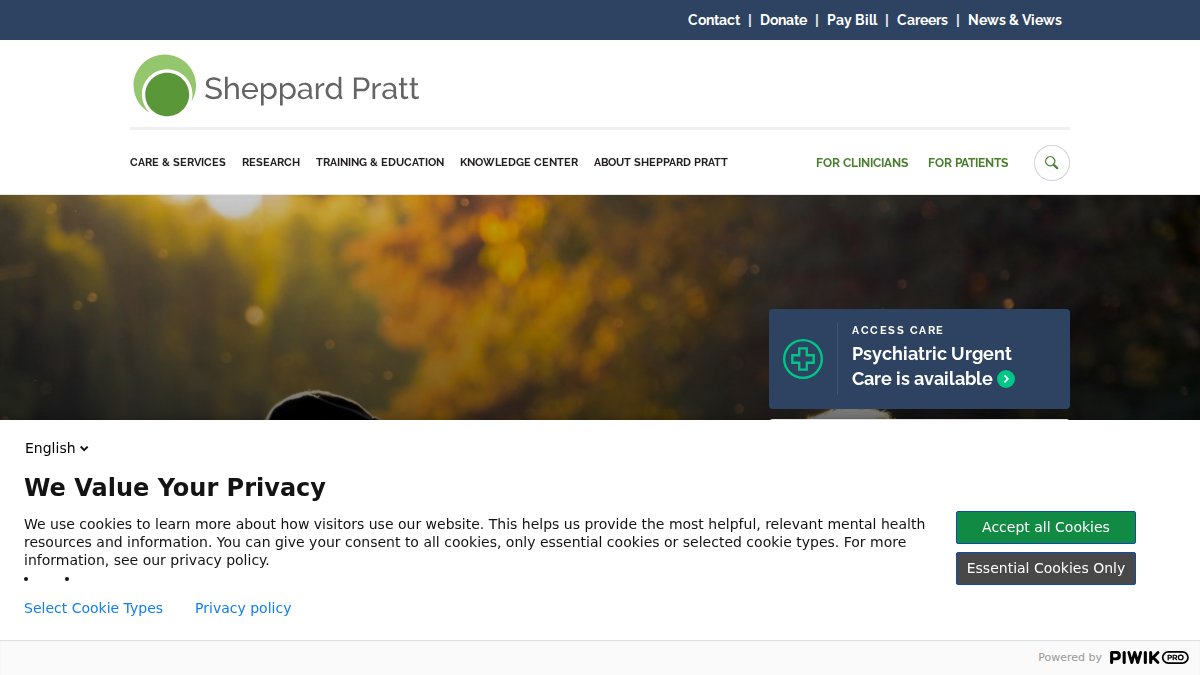
Best for: people stepping down from inpatient care or needing more structure than weekly therapy.
Skip if: you need detox or active medical supervision.
3. Johns Hopkins Hospital: Hospital-Based Psychiatry and Behavioral Sciences
Johns Hopkins operates a psychiatry and behavioral sciences service. That matters most for complex presentations: mood disorders, anxiety, and cases where a psychiatric diagnosis needs to be sorted out alongside other medical conditions.
The honest limitation is scope. Hospital psychiatry is built for evaluation, stabilization, and specialty treatment, not the day-to-day skills coaching that community rehabilitation provides.
Best for: complex diagnostic questions and specialty psychiatric care.
Skip if: you need ongoing community-based skills support.
4. University of Maryland Medical Center: Academic Psychiatric Care
Academic medical centers can bring research-informed practice and multidisciplinary teams. For readers comparing hospital options, it is a legitimate starting point for hospital-based psychiatric care.
What most guides miss is that a ranking tells you about reputation, not fit. The supplied results do not describe specific rehabilitation programs, services, or costs here, so treat this as an entry point for a phone call rather than a finished recommendation.
Best for: people seeking hospital-based psychiatric care with academic resources.
Skip if: you need a community rehabilitation program with daily living support.
5. Adventist HealthCare Shady Grove Medical Center: Inpatient Mental Health Treatment
When someone is in crisis and needs close attention, inpatient care is the appropriate level, and Adventist HealthCare Shady Grove Medical Center offers inpatient mental health treatment for exactly that situation.
Here is the part families often learn too late: discharge planning should start on day one. Ask what happens the week after inpatient care ends, because the transition home is where many people lose ground.
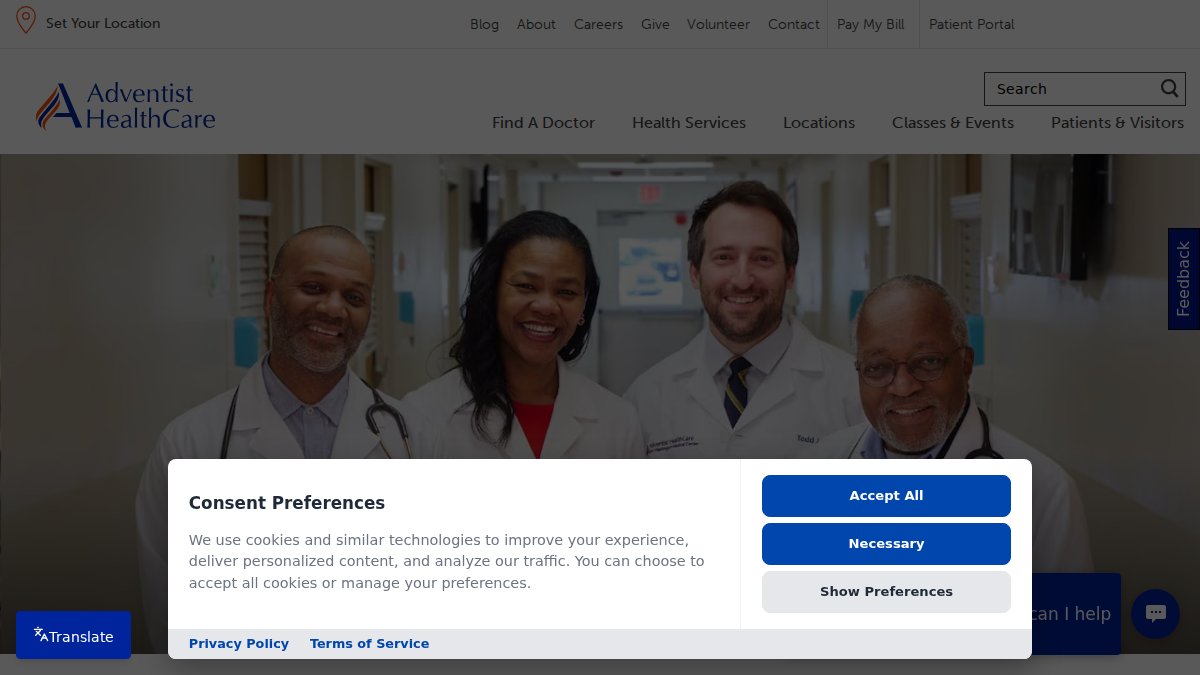
Best for: short-term stabilization when close monitoring is needed.
Skip if: the person is stable and needs outpatient or community services instead.
6. Tranquility Woods: Residential Dual-Diagnosis and Detox
Co-occurring disorders change the whole calculation.
The trade-off is intensity and cost. Residential and detox are the most expensive levels on this list, and the supplied information does not include prices or detailed admission criteria.
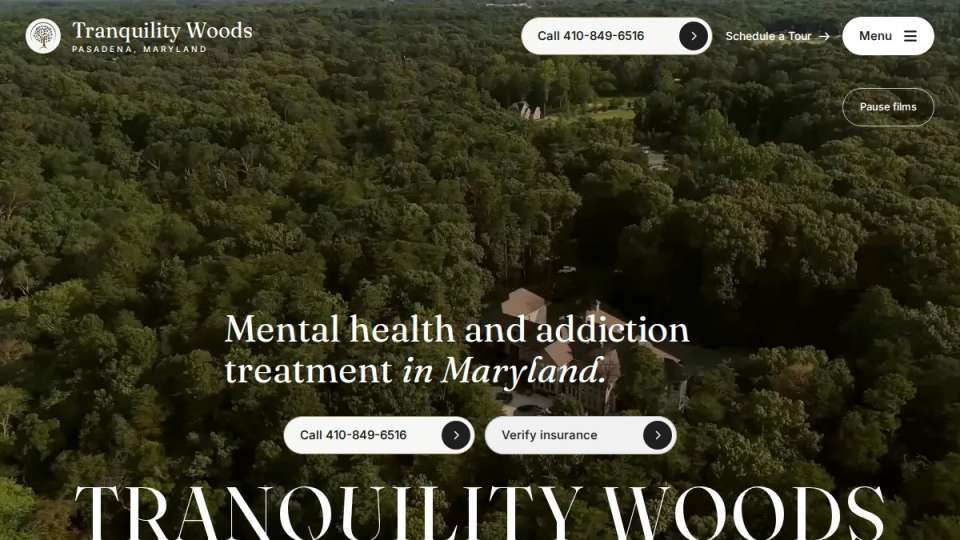
Best for: adults with co-occurring mental health and substance use disorders needing detox and residential structure.
Skip if: you need psychiatric rehabilitation only, with no substance use component.
What Level of Care Do You Actually Need?
Match the setting to the clinical need, not to the reputation of the name.
Inpatient hospitalization fits acute risk: active suicidal or homicidal ideation, psychosis that is unsafe outside a locked setting, or symptoms needing 24/7 medical and nursing supervision. The purpose is evaluation and stabilization, not long-term skills building. If someone cannot be safely left alone, pursue this level first.
Residential treatment fits people who do not need hospital-level medical monitoring but do need round-the-clock structure, medication management, and a supervised setting.
Partial hospitalization (PHP) fits people who need several structured days per week but can safely sleep at home.
Community-based psychiatric rehabilitation fits people who are stable enough to live independently but need practical skills, social connection, and coordination to stay that way.
A short self-check before you call
Ask three questions. Is the person safe to be alone overnight? Can they manage medications without daily oversight? Is the main need crisis stabilization, or is it building daily-living skills? If the answer to the first two is no, start with inpatient or residential. If the main need is skills and coordination, community rehabilitation is the better fit.
What to prepare for an admission call
Have ready: the person’s diagnosis or presenting concerns, current medications, insurance card, any recent discharge paperwork, and a list of safety concerns. Consider asking each program the same questions: What level of care are you recommending, and why? What is the expected length of stay? What does discharge planning look like, and when does it start? What is the estimated cost after insurance?
A program that cannot clearly state the level of care it is recommending may not be giving you a clinical match.
When a residential bed is not the right or available option
If someone is in immediate danger, do not wait for a bed. Call 911 or the 988 Suicide & Crisis Lifeline. For non-emergency crisis support, mobile crisis teams and hospital psychiatric emergency services can assess safety the same day.
If you are unsure which level fits, ask any admissions line one question: “What level of care are you recommending, and why?” A provider that cannot answer clearly is not the right fit.
Frequently Asked Questions
What should I look for in a psychiatric rehabilitation program?
Look for licensed clinicians (psychiatrists, psychologists, social workers), a clear level-of-care assessment, and services that match your goals, such as life skills training, social skills development, and family support. Ask about admissions timelines, insurance verification, and whether the program coordinates with your outpatient therapist. For Medicaid recipients in Baltimore, UPTOWN LIFESTYLES LLC offers a psychiatric rehabilitation program with no cost, including positive parenting classes and housing and nutrition support.
Does Maryland Medicaid cover psychiatric rehabilitation services?
Maryland Medicaid covers psychiatric rehabilitation program services for eligible recipients, but coverage rules and prior authorization requirements can vary. Contact the program directly to verify your eligibility and confirm what is covered before you start. UPTOWN LIFESTYLES LLC states that its PRP services are zero-cost for Medicaid recipients in Baltimore, so ask about verification steps when you call.
What is the difference between psychiatric rehabilitation and traditional therapy?
Traditional therapy focuses on talking through emotions and mental health symptoms, while psychiatric rehabilitation helps you build practical daily-living skills, social connections, and independence. Rehabilitation often includes life skills training, job readiness, and coordination with your treatment team. Many people use both: therapy for emotional processing and rehabilitation for functional goals like maintaining housing or returning to work.
Who is eligible for a psychiatric rehabilitation program in Maryland?
Eligibility usually requires a serious mental health condition that affects daily functioning, plus Maryland Medicaid or another funding source. Programs often serve adults and sometimes adolescents. A clinical assessment determines the right level of care. If you were recently discharged from inpatient psychiatric care or struggle with independent living, ask about admissions criteria and wait times when you contact a program like UPTOWN LIFESTYLES LLC.
Can psychiatric rehabilitation help with independent living and social skills?
Yes. Psychiatric rehabilitation programs focus on practical skills like budgeting, cooking, using public transportation, and managing appointments, along with social skills for relationships and workplace interactions. Mental health life skills training is often a core part of the program. UPTOWN LIFESTYLES LLC also offers positive parenting classes and support with stable housing and nutrition for Medicaid recipients in Baltimore.
