
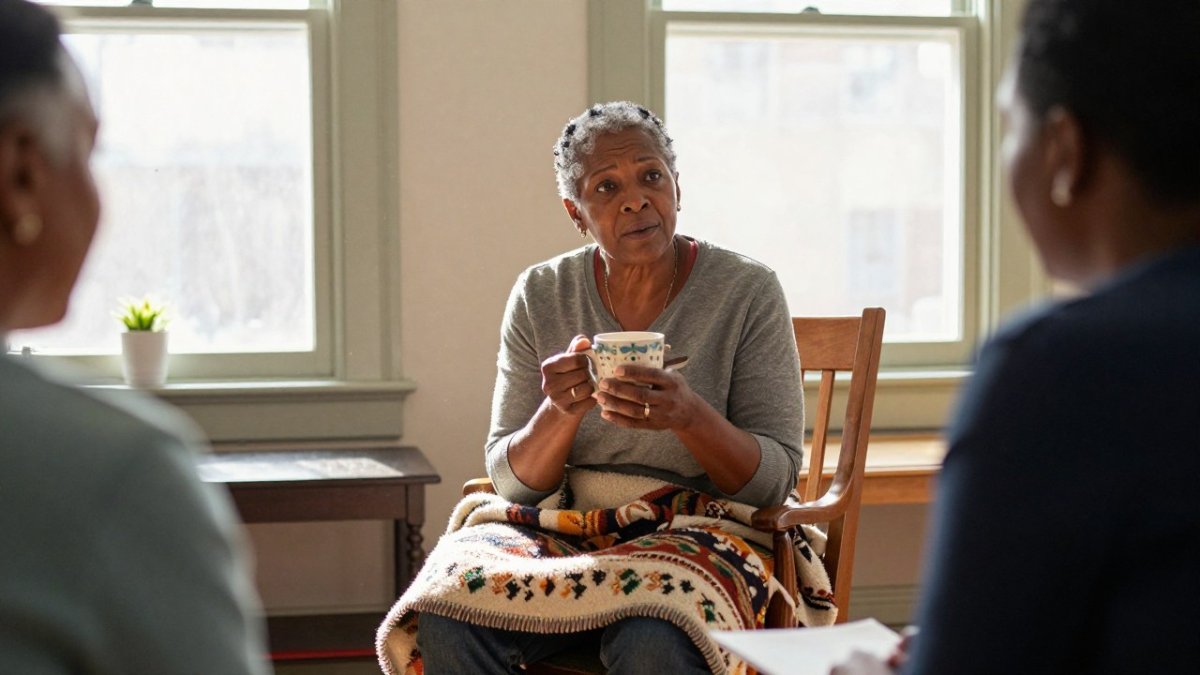
Which Support Groups Help Most After Hospital Discharge?
Quick Summary
Five support groups can help with post-hospitalization recovery: NAMI Connection and NAMI Family Support Group for peer-led mental health support, Alcoholics Anonymous and Narcotics Anonymous for substance-use recovery, and Al-Anon and Nar-Anon for family and friends. Support groups complement clinical follow-up rather than replacing it.
- NAMI Connection serves adults living with a mental health condition and is peer-led.
- NAMI Family Support Group serves family members and caregivers, also peer-led.
- Peer groups cannot diagnose, adjust medication, or provide crisis care; contact 988 in a crisis.
- Check current listings for pricing, schedules and availability before planning around a group.
- Attend two or three meetings before deciding whether a group fits your needs.
Table of Contents
- Why Support Matters in Post-Hospitalization Recovery
- How We Compared These Five Support Groups
- 1. NAMI Support Groups: Peer-Led Mental Health Support
- 2. Alcoholics Anonymous and Narcotics Anonymous: Substance-Use Recovery Groups
- 3. SMART Recovery: Skills-Based Support for Substance Use
- 4. Al-Anon and Nar-Anon: Support for Family and Friends
- Benefits and Disadvantages of Support Groups to Weigh Before Joining
- Choosing Your First Support Group After Discharge
- Frequently Asked Questions
Why Support Matters in Post-Hospitalization Recovery
Last Updated: November 19, 2026
Leaving the hospital is often the hardest moment in psychiatric recovery, not the easiest. The structure of inpatient care falls away, and daily life resumes with fewer built-in supports. That is why support groups matter. Many people find the transition easier when they have a regular place to talk with others who understand what they have been through. (Source: SAMHSA support-group resource)
A support group is a gathering of people who share a common experience, such as a mental health condition, a substance-use history, or the experience of loving someone in recovery. Members listen, share, and help each other stay on track between clinical appointments.
Many people find that the hardest part of returning home is the isolation. Peer groups address that directly. For broader ways to strengthen mental health after discharge, see our guide to 7 ways to improve mental health with psychiatric rehabilitation. Support groups complement clinical follow-up rather than replacing it, and they work best alongside a treatment plan your care team has approved.
The [SAMHSA support-group resource | samhsa.gov] lists a range of community-based options, which is a useful starting point for anyone leaving care.

How We Compared These Five Support Groups
Check each organization’s current listings for pricing, meeting schedules and availability before you plan around them. Availability can change by location, and many groups now meet online as well as in person.
The five groups differ in format, audience and what they cover, as summarised below.
| Group | Audience | Format or focus |
|---|---|---|
| NAMI Connection | Adults with a mental health condition | Peer-led, member sharing |
| NAMI Family Support Group | Family members and caregivers | Peer-led |
| Alcoholics Anonymous | Alcohol recovery | Alcohol-focused group |
| Narcotics Anonymous | Drug recovery | Drug-focused group |
| SMART Recovery | Substance-use recovery | Skills-based approach |
| Al-Anon and Nar-Anon | Family and friends of people in recovery | Support for the people around the patient |
1. NAMI Support Groups: Peer-Led Mental Health Support
NAMI, the National Alliance on Mental Illness, runs two distinct peer-led formats that matter after a psychiatric discharge, and they are not interchangeable. NAMI Connection is a recovery support group for adults living with a mental health condition, typically led by trained peers. NAMI Family Support Group is for family members and caregivers, also typically peer-led. Knowing which one you need is the first decision.
How it works. Connection groups are structured around member sharing rather than instruction: a trained peer facilitator opens the meeting, sets confidentiality ground rules, and gives each person time to speak. There is no curriculum, no diagnosis, and no clinical advice. That is the point, the value is in hearing from people who have managed the same daily challenges after discharge, such as rebuilding a routine, handling medication side effects in social situations, or re-entering work or school.
Access and cost. Check the current listing for your area with the NAMI state and local affiliate network before assuming a nearby meeting exists, since availability varies by affiliate and some groups meet online as well as in person.
Pros: Peer-led, and available in both mental health and family formats.
Cons: Coverage depends on local affiliate capacity, and rural areas may have fewer in-person meetings. Groups are not therapy and cannot adjust medication or provide crisis care.
Best for: adults leaving psychiatric inpatient or partial hospitalization who want ongoing peer connection, and family members who want their own separate support space.
Watch out: a peer group is not a crisis service, if you are in crisis, contact 988 or emergency services rather than waiting for the next meeting.
2. Alcoholics Anonymous and Narcotics Anonymous: Substance-Use Recovery Groups
Alcoholics Anonymous and Narcotics Anonymous are both listed by SAMHSA as support group options for people dealing with alcohol or drug use. Alcoholics Anonymous focuses on alcohol recovery, and Narcotics Anonymous focuses on drug recovery.
Pros: Both appear in a federal support-group resource, giving a clear starting point for finding meetings.
Cons: Meeting formats and local availability were not verified in our sources.
Best for: Alcoholics Anonymous for alcohol recovery; Narcotics Anonymous for drug recovery. (Source: National Institute of Mental Health guidelines)
3. SMART Recovery: Skills-Based Support for Substance Use
SMART Recovery is also listed by SAMHSA as an option for substance-use support. It is a distinct approach from peer groups that rely on shared steps, so it can suit people who prefer structured, skills-based sessions.
Pros: Listed in a federal support-group resource, offering a route to explore options.
Cons: Meeting details, availability, and cost were not confirmed in our sources.
Best for: people exploring support options for substance-use recovery who want a skills-focused approach.
4. Al-Anon and Nar-Anon: Support for Family and Friends
Al-Anon and Nar-Anon serve family members and friends of people in recovery, not the person in recovery. For caregivers, this is often the missing piece. Support for the people around a patient matters during reintegration, because household stress affects recovery.
Pros: Both serve a distinct audience of family and friends, filling a gap that groups for the person in recovery do not cover.
Cons: Formats, availability, and pricing were not verified in our sources.
Best for: family members and friends seeking support while someone they know is in recovery.
Benefits and Disadvantages of Support Groups to Weigh Before Joining
Support groups offer shared experience and a regular schedule. Some are free to attend, and some do not require a referral.
The drawbacks are real. Group quality varies. A poorly run session can feel unstructured, and some members may not be stable enough for open discussion. Peer groups cannot diagnose or adjust medication, so they should not replace clinical care. Watch out: if a group encourages you to stop prescribed treatment, leave and tell your provider.
Before joining, ask about facilitation, confidentiality, and how new members are welcomed. Our guide to psychiatric rehabilitation compared with outpatient therapy explains how different types of support fit together.
Choosing Your First Support Group After Discharge
Naming groups is only the first step. The harder question is which one fits the first thirty days after discharge, when the practical needs are different from long-term recovery. Use this sequence.
Step 1: Name the primary need. If the main issue is a mental health condition, start with a peer-led mental health group such as NAMI Connection. If substance use is the concern, choose among Alcoholics Anonymous, Narcotics Anonymous, or SMART Recovery based on whether you want a step-based or skills-based format. If you are the caregiver, start with Al-Anon, Nar-Anon, or NAMI Family Support Group rather than a patient group.
Step 2: Match the format to your condition. Recovery is not one category. After a stroke, cardiac event, surgery, or serious injury, the most useful group is often condition-specific, for example, a hospital-affiliated stroke or cardiac rehabilitation support group, because members share the same functional milestones and equipment questions. General peer groups are better for emotional and social reintegration. Ask your discharge planner whether your hospital or rehabilitation program runs a condition-specific group; many do, and they are frequently free.
Step 3: Check access before you commit. Confirm four things: whether the group is free or has a fee, whether it is peer-led or clinician-facilitated, whether it meets in person or online, and whether you need a referral. Peer groups often require no referral, while clinical or hospital-based groups may require one. If cost or coverage is a barrier, our Medicaid and mental health access guide explains what to check.
Step 4: Screen for safety and quality. Before your first meeting, ask the facilitator or organizer about facilitator training, confidentiality rules, how new members are welcomed, and what the group does if a member is in crisis. A well-run group states these upfront. Accessibility matters too: ask about wheelchair access, interpreters, transportation options, and whether online meetings work on a low-bandwidth connection.
Step 5: Try two or three meetings, then decide. A single session is not enough to judge fit. Give each group two or three visits, and tell your care team which ones you are trying so they can flag any conflict with your treatment plan.
Watch out: if any group encourages you to stop prescribed medication or skip clinical follow-up, leave and tell your provider, peer support complements clinical care, it does not replace it.
When you are ready to connect with formal services, our step-by-step guide to applying for mental health services walks through the process, and our guide to psychiatric rehabilitation compared with outpatient therapy explains how different types of support fit together.
Frequently Asked Questions
Can you give me some examples of support groups?
Common examples include NAMI Support Groups for mental health, Alcoholics Anonymous and Narcotics Anonymous for alcohol and drug recovery, SMART Recovery for skills-based substance-use support, and Al-Anon or Nar-Anon for family and friends of someone in recovery. Each serves a different need, so start with the situation that matches yours. Formats, locations and costs vary by group, so confirm details with the organization directly or through the SAMHSA support-group locator before attending.
How do I find a support group after leaving the hospital?
Ask your discharge team or outpatient provider for referrals before you leave, since many hospitals keep lists of local groups. You can also use the SAMHSA support-group and local-program resource or the NAMI group directory to search by location and format. Ask whether a group meets in person, online, or both, and whether it fits the condition you are recovering from. Keep your follow-up appointments, because peer groups complement clinical care rather than replace it.
Are online support groups helpful during recovery?
Online support groups can help people who have limited mobility, transportation problems, or a schedule that makes in-person meetings hard to attend. They also offer access to people you might not find locally. The trade-offs include less face-to-face connection and more difficulty confirming who is leading the group. Check whether a group has a trained facilitator, a clear structure and privacy rules before you share personal details.
What is the difference between a support group and therapy?
A support group is usually peer-led, meaning people share their experiences with others who understand similar challenges. Therapy is delivered by a licensed clinician who assesses your condition, sets treatment goals and adjusts care over time. Support groups offer connection and shared perspective, while therapy offers individualized clinical treatment. Many people benefit from both, and a group should not replace care your provider recommends.
