
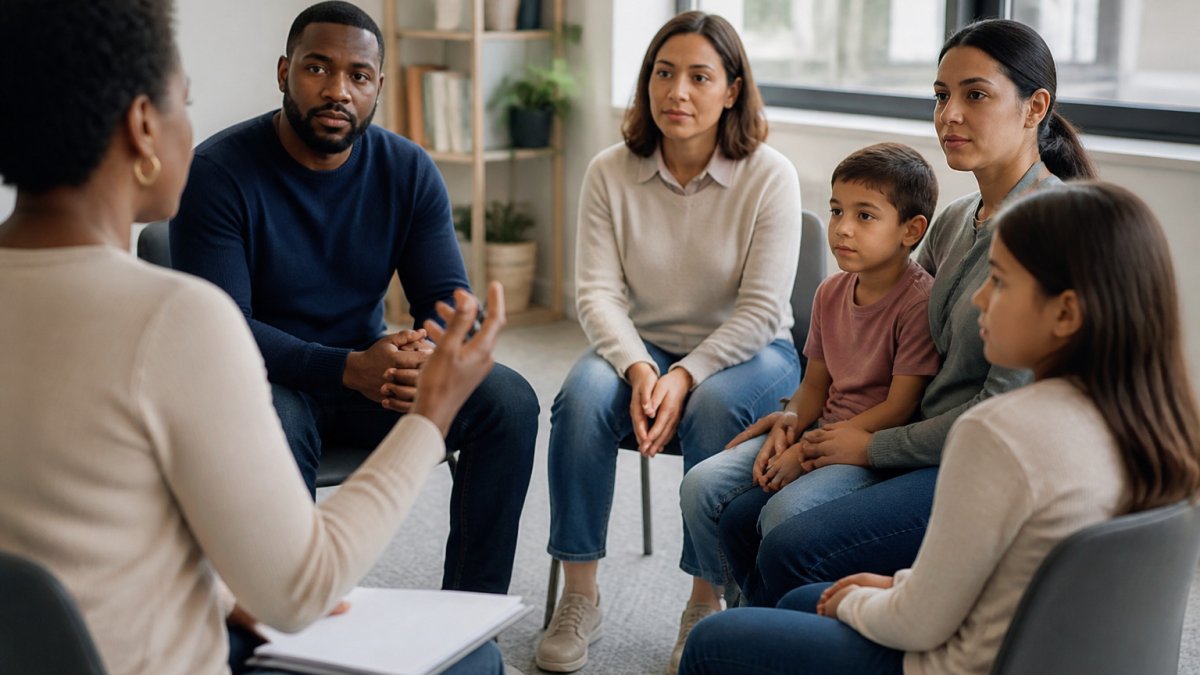
Positive Parenting Classes in Baltimore: Where to Enroll
Quick Summary
Baltimore families can find positive parenting classes through free county health department programs, a six-week Nurturing Parenting Program offered by Baltimore County, and online formats that include live group, self-paced, and coached options. Confirm schedules, costs, and whether a certificate will be accepted before enrolling, since these details often are not published.
- The Baltimore County Department of Health offers free classes on communication and stress skills.
- The Baltimore County Nurturing Parenting Program is a structured six-week course that meets twice a week.
- Online options include live group classes, self-paced courses, and hybrid coached formats.
- Confirm in writing that a provider’s certificate will be accepted before paying if a court or agency requires it.
- A class alone rarely changes behavior unless the home routine changes as well.
Table of Contents
- What Is a Positive Parenting Program?
- Free Positive Parenting Classes in Baltimore
- Parenting Classes in Baltimore County
- Online Parenting Classes Available Across Maryland
- Side-by-Side: How the Baltimore Options Compare
- How to Choose the Right Class for Your Family
- Getting Support Beyond a Parenting Class
- Contact UPTOWN LIFESTYLES LLC to Ask About Positive Parenting Support
- Frequently Asked Questions
What Is a Positive Parenting Program?
Last Updated: November 3, 2026
Positive parenting is an approach that guides children through encouragement, consistent routines, and clear expectations instead of punishment alone. A positive parenting program teaches caregivers these skills in a structured group or online format, usually over several weeks. At UPTOWN LIFESTYLES LLC, positive parenting classes are one part of a broader support plan. Parents in Baltimore who are dealing with behavioral challenges often look for programs focused on practical change at home, not just talking about feelings.
Most programs focus on a few core ideas: understanding why children act out, setting limits without harshness, praising specific behavior, and staying calm during conflict.
Programs also differ in format. Some are court-ordered or referred through child welfare agencies, while others are voluntary. Voluntary classes usually let parents choose their schedule and focus on the challenges they face most.
Watch out: a class alone rarely fixes a child’s behavior if the home routine stays the same. Pick a program that gives you specific tools you can practice between sessions.
Free Positive Parenting Classes in Baltimore
Several Baltimore-area organizations offer parenting education at no cost. Some Baltimore-area organizations offer parenting education at no cost. Check with local health departments and family service agencies directly for current schedules and registration steps.
Parenting Classes in Baltimore County
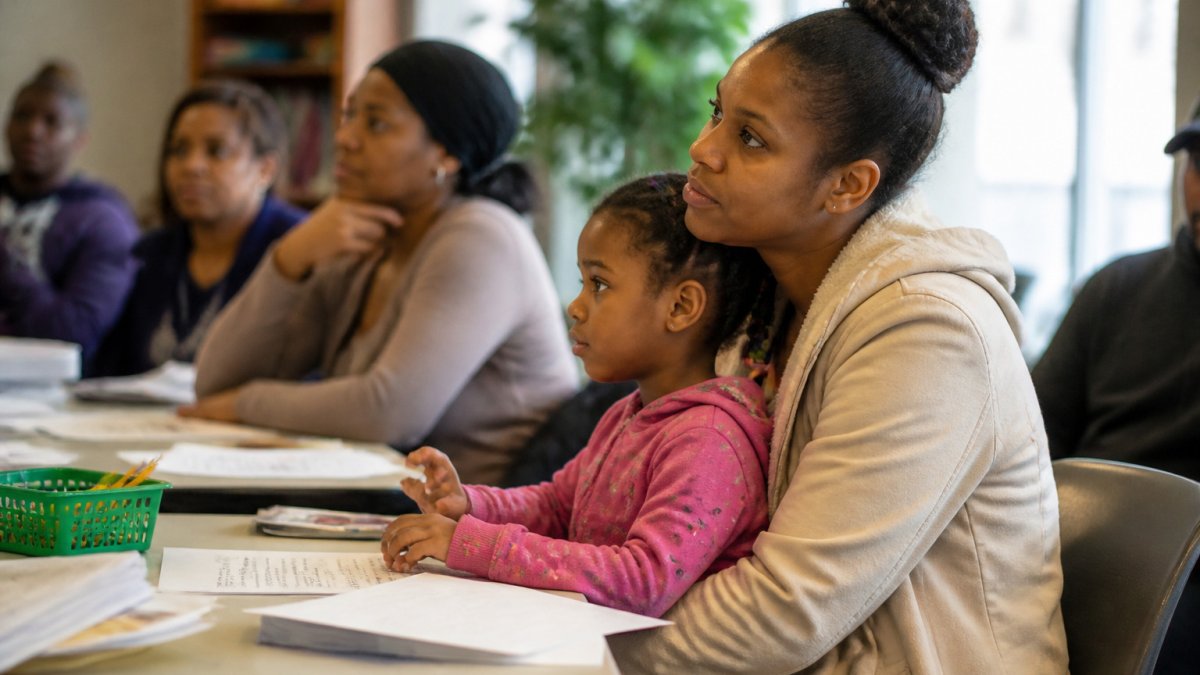
Enrollment dates and costs are not confirmed on the county page, so contact the county’s parenting services office before you plan around the program.
Online Parenting Classes Available Across Maryland
Online formats let parents join from home. Group interaction and in-person coaching are often more limited than in person, so attending consistently and practicing skills between sessions matters.
Online parenting classes generally fall into three structures, and the structure matters more than the brand name:
- Live group classes meet at a set time on a video platform, usually once a week for four to twelve weeks. You get real-time instructor feedback and peer discussion, but you must attend on the provider’s schedule.
- Self-paced courses are recorded modules you complete on your own timeline. They are the most flexible and often the least expensive, but they rarely include individualized feedback.
- Hybrid or coached formats combine recorded lessons with scheduled check-ins by phone or video. They suit parents who want flexibility plus accountability.
When comparing online options, verify five things before you pay:
- Live or self-paced. A live class builds accountability; a self-paced course fits irregular work shifts. Ask how attendance is tracked.
- Instructor credentials and feedback. Ask whether a licensed clinician, certified parent educator, or trained facilitator leads the class, and whether you receive feedback on your specific situation.
- Certificate and acceptance. If a court, child welfare agency, or employer requires proof of completion, confirm in writing that the provider’s certificate will be accepted before you enroll. Acceptance rules vary by agency and by case, and a certificate from one program is not automatically accepted by another.
- Cost and refund policy. Prices for online parenting classes vary widely, and many providers offer sliding-scale fees or free seats through grants. Ask directly about reduced-cost options and the refund or transfer policy if you miss sessions.
- Accessibility and language. Ask about closed captioning, interpretation, disability accommodations, and whether sessions are recorded for later viewing. These details are rarely posted and usually require a phone call or email.
A common pattern is that parents enroll in a self-paced course, complete it quickly, and then find they need live coaching for the hardest behaviors. If your main concern is a specific behavior rather than general skills, ask whether the provider offers any one-on-one session before or after the group course.
Watch out: a certificate of completion is not the same as a clinical assessment. If a court or agency is involved, confirm the specific documentation required with the referring worker before you choose a class.
Side-by-Side: How the Baltimore Options Compare
The table below summarizes what the sources reviewed actually confirm. Where a detail was not published, we say so rather than guess.
| Option | Cost | Format | Length | Best For |
|---|---|---|---|---|
| Baltimore County Department of Health classes | Free | Not published | Not published | No-cost communication and stress skills |
| Healthy Babies Baltimore / Family Tree | Not published | Not published | Circle of Security: two weeks | Local referrals and a short course |
| Baltimore County Nurturing Parenting Program | Not published | Meets twice a week | Six weeks | Structured multiweek curriculum |
| GBMC Parent Education Program | Not published | Not published | Not published | Pregnancy, birth, and postpartum |
| UPTOWN LIFESTYLES LLC positive parenting classes | Contact us for pricing | Part of a broader support plan | Contact us | Parents with behavioral challenges seeking integrated support |
For free options, the county health department is the clearest choice. For structure, the six-week county program stands out. For a combined approach, our team can discuss how positive parenting fits with other support.
How to Choose the Right Class for Your Family
Most guides tell you to consider your child’s age and your schedule. A more useful approach is to match the class to your specific situation first, then check logistics. The categories below reflect the needs that local programs are typically designed to serve.
If you are expecting a baby or have an infant. Look for prenatal, newborn care, and postpartum programs rather than behavior-focused classes. These cover feeding, sleep, bonding, and postpartum mood, and they are usually shorter and offered through hospitals and health systems. A positive parenting class for behavior is not the right first step at this stage.
If you have a toddler or preschooler. Focus on routines, transitions, and limit-setting without harsh discipline. Ask whether the curriculum addresses tantrums, toilet learning, and bedtime resistance specifically, because general communication classes often skip these practical scenarios.
If you have a school-age child. Look for classes that teach specific behavior-management sequences: describing the behavior you want, giving clear instructions, using consistent consequences, and praising effort. Ask for a sample session outline so you can see whether the skills are concrete enough to practice at home.
If you have a teenager. Prioritize programs that cover negotiation, monitoring, and conflict de-escalation. Teen-focused classes should address risk behavior, screen and social media limits, and how to stay connected while setting boundaries.
If a court or agency referred you. Confirm the required curriculum, number of sessions, and documentation format with the referring worker before enrolling. A voluntary community class may not satisfy a mandated requirement, and completing the wrong program can cost you both time and money.
If you are co-parenting across households. Ask whether the program welcomes both caregivers and whether it addresses consistency between homes. Programs that only serve one parent often leave the biggest source of conflict unaddressed.
Once you have a category, verify these logistics with a direct call or email:
- Total commitment. Ask for the number of sessions, the length of each session, and the attendance policy. A six-week program meeting twice weekly is about twelve sessions, which is a real scheduling commitment.
- Childcare and timing. Ask whether childcare is provided on site and whether classes meet during school hours, evenings, or weekends. A class you can attend consistently beats a better-rated class you miss.
- Cost and financial assistance. Ask about sliding-scale fees, scholarships, and whether the program accepts referrals that waive the fee. Free and subsidized seats often exist but are not advertised.
- Accessibility. Ask about interpretation, disability accommodations, transportation assistance, and remote participation. These details are rarely published and usually require a phone call.
- Between-session practice. Ask what you will be expected to do at home each week. Strong programs assign specific routines or tracking sheets; a useful question for any provider is, “What will I do differently at home this week?”
A common pattern is that parents choose the most convenient class rather than the one matched to their child’s age and their main concern, then drop out when the content does not fit. Spending ten minutes on the matching questions above before you enroll is usually worth more than comparing ratings.
Watch out: schedules, prices, and eligibility rules change frequently, and a program listed as free or open may have a waitlist or a referral requirement. Confirm current details directly with the provider before you plan around a start date.
Getting Support Beyond a Parenting Class
Some families need more than skills training. If a parent is experiencing depression, anxiety, or stress that affects daily life, a parenting class may not address the root cause. In that case, a mental health evaluation can help identify what support is needed.
A qualified mental health professional can assess whether outpatient psychiatric services in Baltimore are appropriate for a parent’s situation. For broader family concerns, our family mental health guide explains the types of care available. Parents looking for local mental health help for themselves or their family can also review our Baltimore mental health support guide.
If you are unsure where to start, a qualified professional can assess your situation and recommend the right level of care. You can explore outpatient psychiatric mental health services in Baltimore to see what evidence-based treatment for depression and other challenges looks like.
Contact UPTOWN LIFESTYLES LLC to Ask About Positive Parenting Support
If you want to understand how positive parenting classes fit into a broader plan for your family, our team can answer your questions. You can review our learning center’s parenting program offerings before you reach out. Our positive parenting guide covers approaches to behavioral challenges in more depth. Reach out to ask about current availability, eligibility, and what support is right for your household.
Frequently Asked Questions
Where can I find free parenting classes in Baltimore?
Several Baltimore-area organizations offer parenting education at no cost. Check with local health departments and family service agencies directly for details. Schedules and enrollment change, so confirm current dates by calling the agency or checking its website before you plan to attend.
What is a positive parenting program?
A positive parenting program teaches caregivers to guide children with encouragement, consistent routines, clear expectations and respectful discipline rather than punishment alone. Most programs are group-based and run over several weeks, covering communication, behavior management and parent-child relationships. A class is general education, not individual treatment for a child’s or parent’s condition.
Are there any free online positive parenting courses available?
Some parenting education is offered online and at no cost, but availability depends on the provider and the date you check. Before enrolling, confirm whether a course is free, what it covers, and whether it is accepted for your situation. Organizations listed in this guide describe their classes, but the supplied information does not confirm current online course prices, so verify directly with the provider.
Are parenting classes available online in Maryland?
Parenting classes are offered in multiple formats across Maryland, including in-person group sessions and some remote options. Format, schedule and eligibility vary by program and county. Contact each provider to ask whether a session can be attended online, what the class length is, and how to register. UPTOWN LIFESTYLES LLC can answer questions about its own positive parenting classes for the people it serves.
How do I choose a parenting class that fits my family’s needs?
Start with your goal: general skills for a young child, help with school behavior for an adolescent, or support around pregnancy and the first months after birth. Then compare cost, schedule, length, format and who the class is designed for. Ask providers whether they offer sessions in your language and whether they can accommodate accessibility needs. Calling a provider directly is the fastest way to confirm details the public listings leave out.
